The Detroit–Berlin Axis: A Transatlantic Dialogue
The sonic DNA of Berlin techno cannot be understood without its direct kinship with Detroit, Michigan. In the late 1980s, pioneering African-American producers—including Juan Atkins, Derrick May, and Kevin Saunderson (The Belleville Three), alongside Underground Resistance (Mad Mike Banks, Jeff Mills)—forged a futuristic, machine-driven sound born from the deindustrialized landscapes of the Motor City.
When Tresor founder Dimitri Hegemann and fellow Berlin music activists discovered these vinyl pressings, they invited Detroit artists to Berlin immediately following the fall of the Wall. In raw, unmonitored East Berlin basement vaults, Detroit's sci-fi minimalism resonated with German youth experiencing immense political catharsis. This connection established an enduring mutual alliance that remains central to Berlin’s electronic community today.
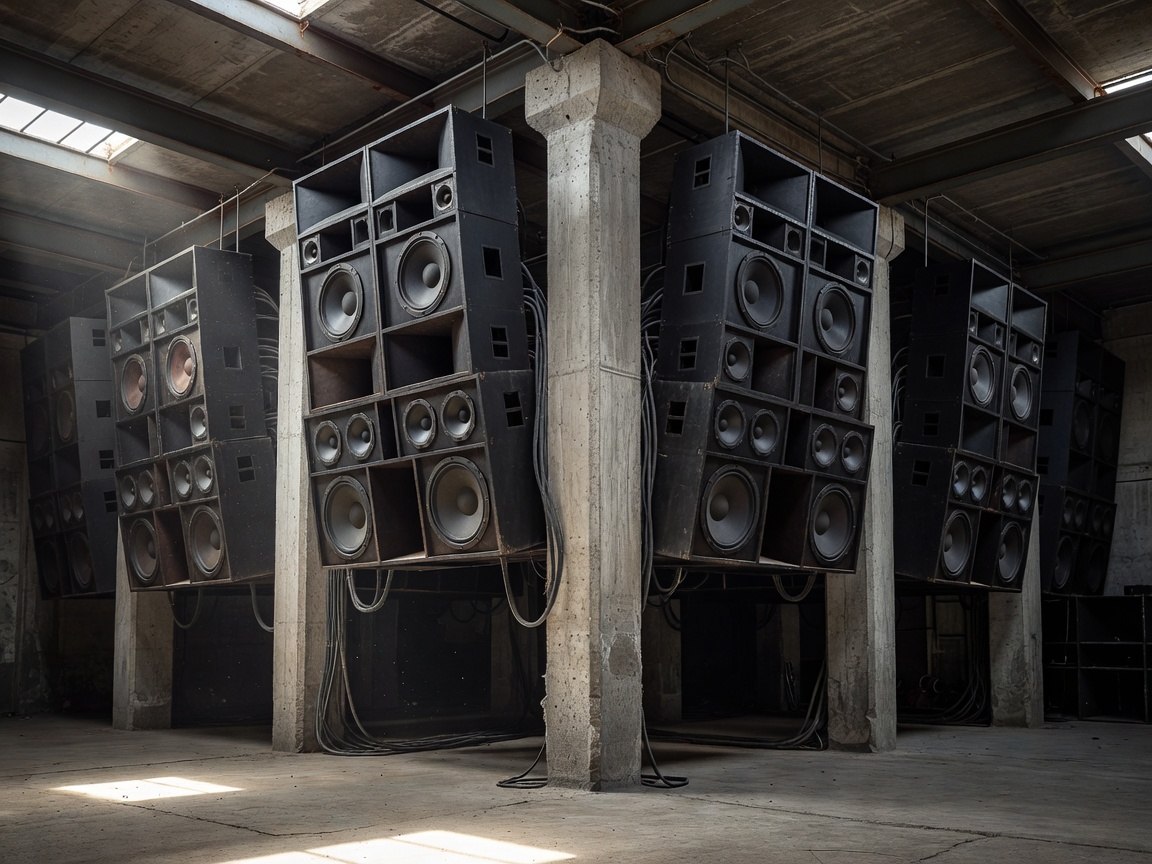
Sound System Architecture: The Philosophy of Physical Pressure
Unlike conventional international clubs that rely on deafening mid-range frequencies to simulate intensity, premier Berlin dancefloors focus on custom acoustic room calibration, heavy dampening, and sub-bass clarity.
At venues like Berghain, the primary floor is engineered around a purpose-built Funktion-One sound system with custom horn-loaded loudspeaker enclosures. The acoustic treatment of the 18-meter-high concrete ceiling ensures that standing wave echoes are absorbed, allowing bass transients to hit the human ribcage cleanly without inducing auditory fatigue or painful ear ringing.
Other notable venues have championed competing acoustic systems: RSO Berlin utilizes high-definition systems from Lambda Labs, known for ultra-fast transient response and digital phase accuracy, while small listening bars along Kreuzberg favor vintage Klipschorns or customized rotary mixers like the Bozak and Alpha Recording System (ARS).
Prominent Acoustic Systems in Berlin Clubs
| Audio Brand / Design | Core Engineering Strength | Typical Venue Application |
|---|---|---|
| Funktion-One | Point-source horn loading, paper-cone warmth | Large industrial cavernous rooms |
| Lambda Labs | Digital boundary array subwoofers (Wall of Bass) | High-precision, sub-bass intensive warehouses |
| KV2 Audio | Ultra-low distortion line drivers, analog warmth | Mid-sized dance floors, intimate basements |
| Custom Audiophile Rotaries | Discrete transistor summing, ultra-smooth frequency sweeps | House music rooms, dedicated ambient listening lounges |
The Evolution of Sub-Genres: From Minimal to Hard Groove
While Berlin was internationally synonymous with sparse, hypnotic minimal techno throughout the 2000s (championed by labels like Perlon and Basic Channel), recent years have seen the floor dynamics diversify into faster tempos (140–150 BPM), hard groove, and industrial EBM (Electronic Body Music).
Concurrently, the ambient and listening bar movement has grown exponentially. Venues frequently host dedicated ambient listening sessions, where clubgoers can decompress in low-lit rooms equipped with spatial quadraphonic audio setups, emphasizing field recordings, synthesizer drones, and experimental electroacoustic compositions.
High-Fidelity Club Audio Standards
Clean room tuning prevents acoustic harshness, allowing guests to stay on dancefloors for 10+ hours without severe hearing fatigue.
Hearing Health Precautions
Even perfectly tuned systems operate at sustained 98–104 dBA. High-fidelity acoustic earplugs (musician-grade) are mandatory for safety.